Police Data Pipelines
InsightLPR video breakdown: covert license plate cameras sharing data with the FBI
A LexisNexis demo video, posted publicly and since hidden by the company, walks through how police can use commercial license plate data from tow trucks and hidden cameras to build a "pattern of life" on any vehicle, tie it to 100 million local police records, and run geofence-style searches with no warrant. We break down the full video, minute by minute.
With the click of a button, you can look up details about anyone in the United States. That is the pitch LexisNexis gives to police departments all over the country. With a username you can find a phone number, a vehicle, a license plate, hacked data, and voter registration. In May 2025, the company added InsightLPR to its platform, letting police track and locate vehicles and build a "pattern of life" showing where someone sleeps, visits, and works, and even which friends and family have vehicles spotted near the target vehicle more than once.
A video buried deep in LexisNexis's Vimeo page shows how the system works. We break down the full video for researchers, activists, and legislators below, with screenshots and the complete transcript.
A note on the source. The video was public when FinePrint reviewed it and published this breakdown on September 4, 2026. LexisNexis has since hidden it, and the Vimeo link now returns a "deactivated" page. FinePrint archived a copy before it was pulled. It is preserved on the Internet Archive and embedded here.
00:06 · Accurint Virtual Crime Center (AVCC) dashboard
AVCC is LexisNexis's product sold to thousands of law enforcement agencies around the United States. ICE, the FBI, the VA, and the U.S. Navy also have access. The key selling points of AVCC are:
- Jail data: Arrest data from 80 percent of arrests nationwide, including in states where agencies are banned from handing over incarceration data to immigration authorities.
- Police records: Over 2,400 departments have given LexisNexis access to harvest their local data and share it with any agency willing to pay for AVCC. This includes 100 million local police records, with full details and statements on witnesses, victims, and minors.
AVCC has additional surveillance apps integrated, including:
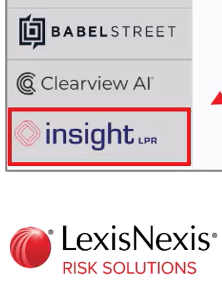
- Babel Street: Social media monitoring.
- Clearview AI: Facial recognition built on images scraped (downloaded, often illegally) from the internet. Its database contains over 70 billion images.
- InsightLPR: License plate data from police, tow trucks, and other sources.
- Others not shown in the video: ShadowDragon by Horizon (hacked data, social media details), Traffic Jam (facial recognition aimed at sex workers and human trafficking), pawn shop data, aerial imagery, and more.
00:36 · A demonstration plate search
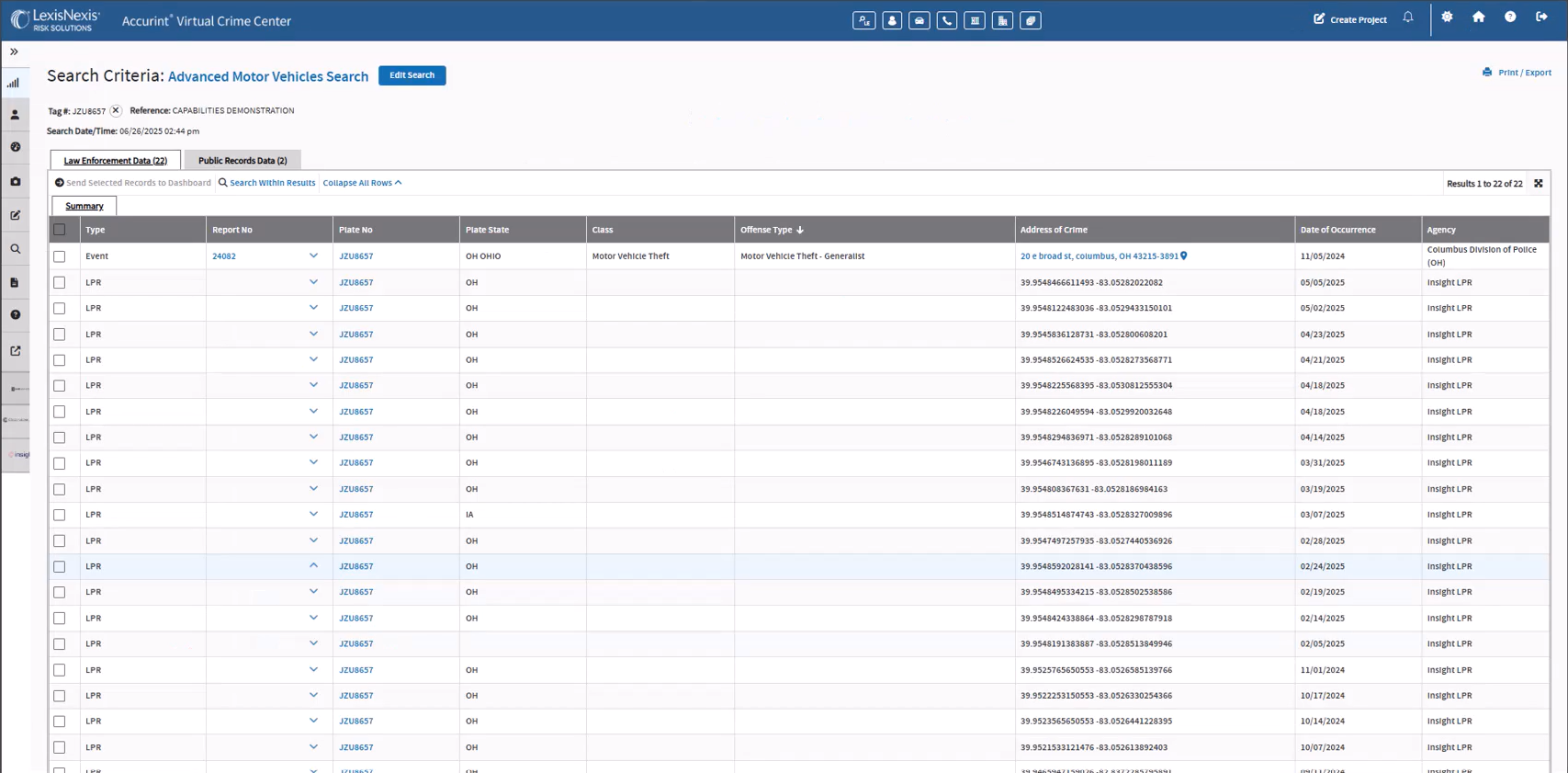
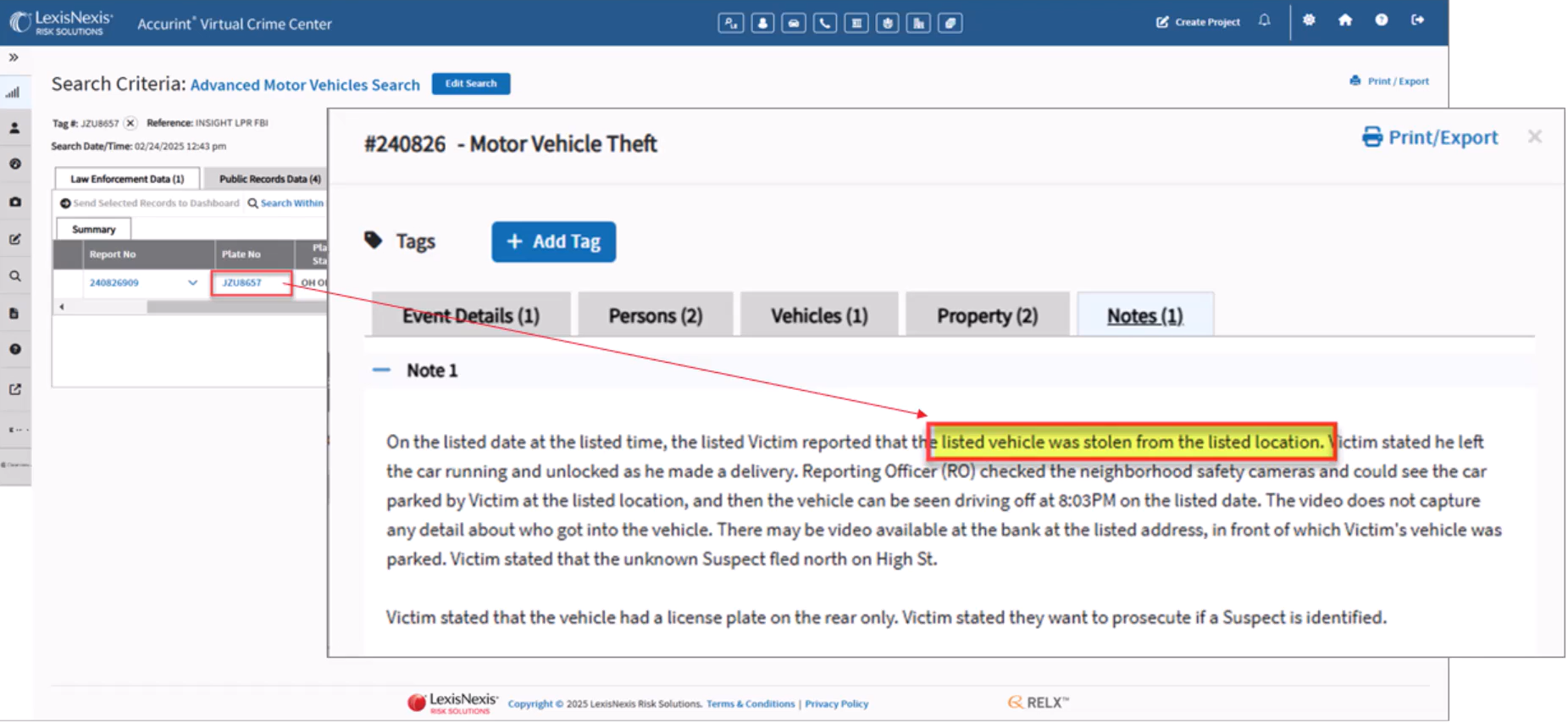
- A demonstration search was run on license plate JZU8657.
- That plate was scanned 22 times in 2024 and 2025, mostly in Ohio but once in Iowa.
- The Columbus Division of Police in Ohio has one instance where the license plate is involved in a motor vehicle theft case. The plate may belong to a victim, suspect, or witness. The results page is indiscriminate and lists all roles. Columbus appears to share its data with LexisNexis, allowing the system to copy police data into a private database once a day.
- The coordinates listed under "Address of Crime" are not crimes. They are the times and places this vehicle was scanned by an InsightLPR camera. These cameras are on tow trucks, police cars, hidden in private vehicles, and mounted on posts. We are investigating reports that some trash collection companies are starting to mount ALPRs on garbage and recycling trucks for an extra revenue stream. The scans, which capture every plate, are not indicative of a crime. Yet the software labels each scan location as the "Address of Crime."
01:12 · ALPR search page
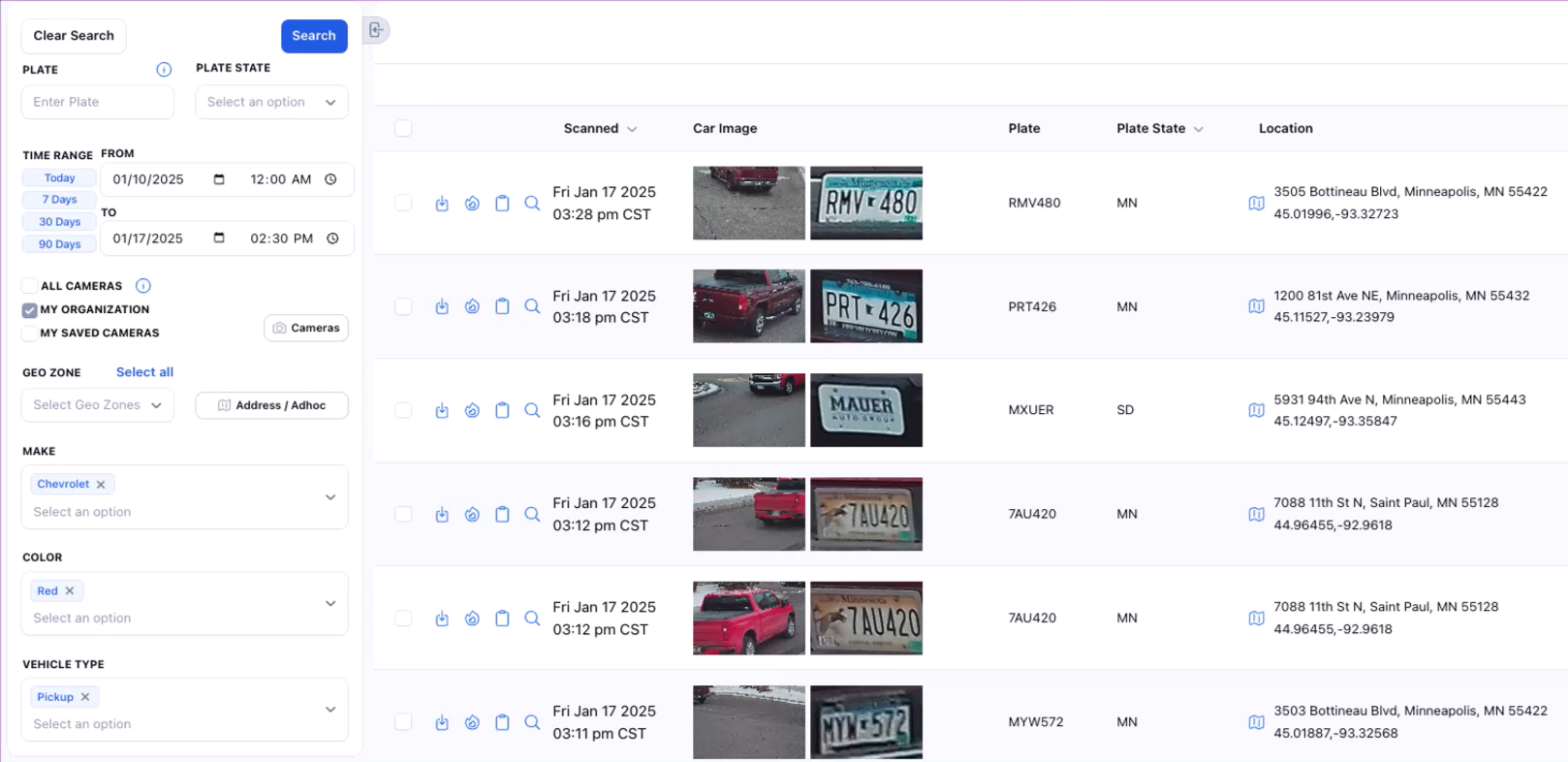
- An example nationwide search for a red Chevrolet pickup truck.
- Live data from the Minneapolis Police Department's ALPR cameras appears to be used in the demonstration. The bottom of the page says "CONFIDENTIAL." The video was posted publicly by LexisNexis.
- Photos of the vehicle are included, along with the background and a zoomed-in image of the license plate.
- Most of the scans are from Minneapolis and St. Paul, Minnesota, where the Trump administration ran a widespread immigration crackdown called Operation Metro Surge. That operation produced multiple ICE shootings, criminal charges against ICE agents, at least one agent shooting through the wall of his hotel, another shooting through a door, and the deaths of two Americans, Renee Good and Alex Pretti. ICE has paid LexisNexis over $20 million for access to AVCC, with plans to copy that data into its Palantir targeting and intelligence system.
- The video says investigators can "search by locations, similar to a cell phone tower dump, identifying vehicles in a defined area, at a specified date and time."
- In June 2026, the U.S. Supreme Court ruled that acquiring historical cell location data through a geofence warrant is a search under the Fourth Amendment. Individuals have a reasonable expectation of privacy in that data, and broad location requests for it face constitutional scrutiny.
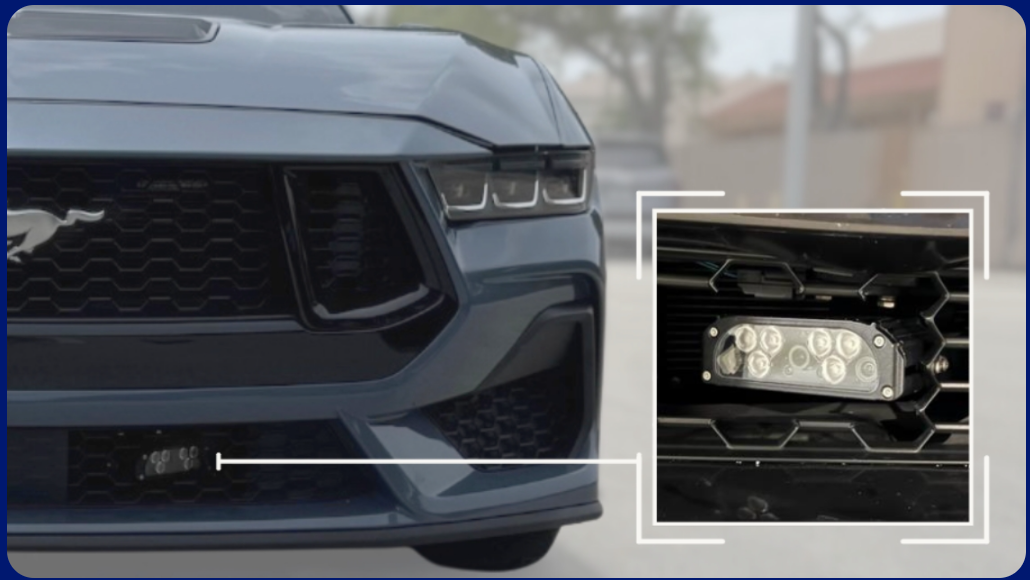
- As with Flock, you can run your search against other organizations' cameras nationwide. But InsightLPR has a large trove of data that Flock does not: commercial data. The company pays tow trucks and repo companies across the U.S. to drive streets and parking lots capturing license plate location data. InsightLPR's mobile cameras are often subtle or hidden, which the company shows off as a feature in its ads:

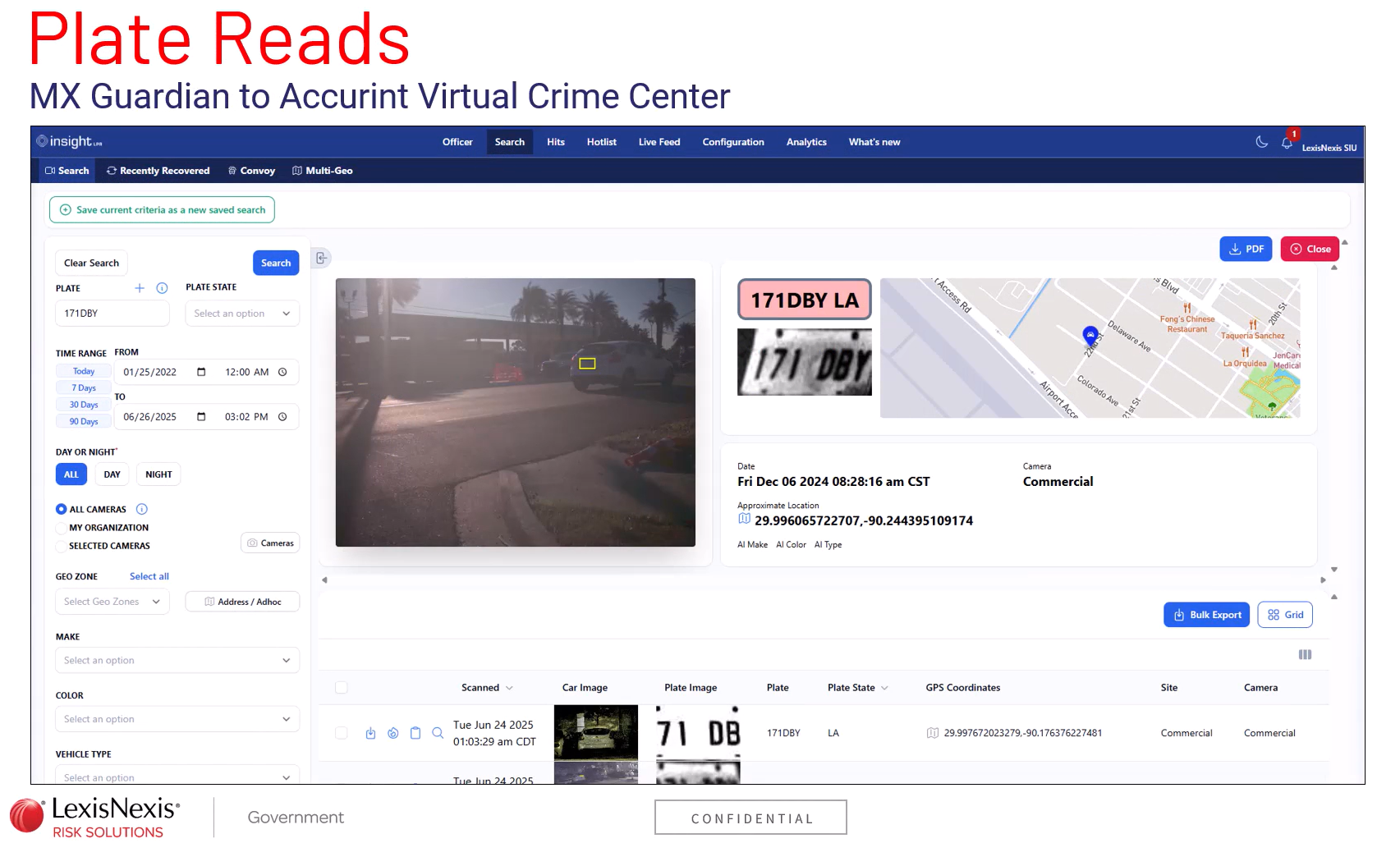
02:22 · Scan page showing commercial data
- Each scan shows the details of the vehicle read, the location, and the type of camera. "Commercial" typically means a tow truck or private repo vehicle. The user can also run an AI agent that reviews the photo to guess the vehicle's make, color, and type.
- The main menu includes options such as "Live Feed."

The demo account shown belongs to the LexisNexis SIU, the company's Special Investigations Unit.
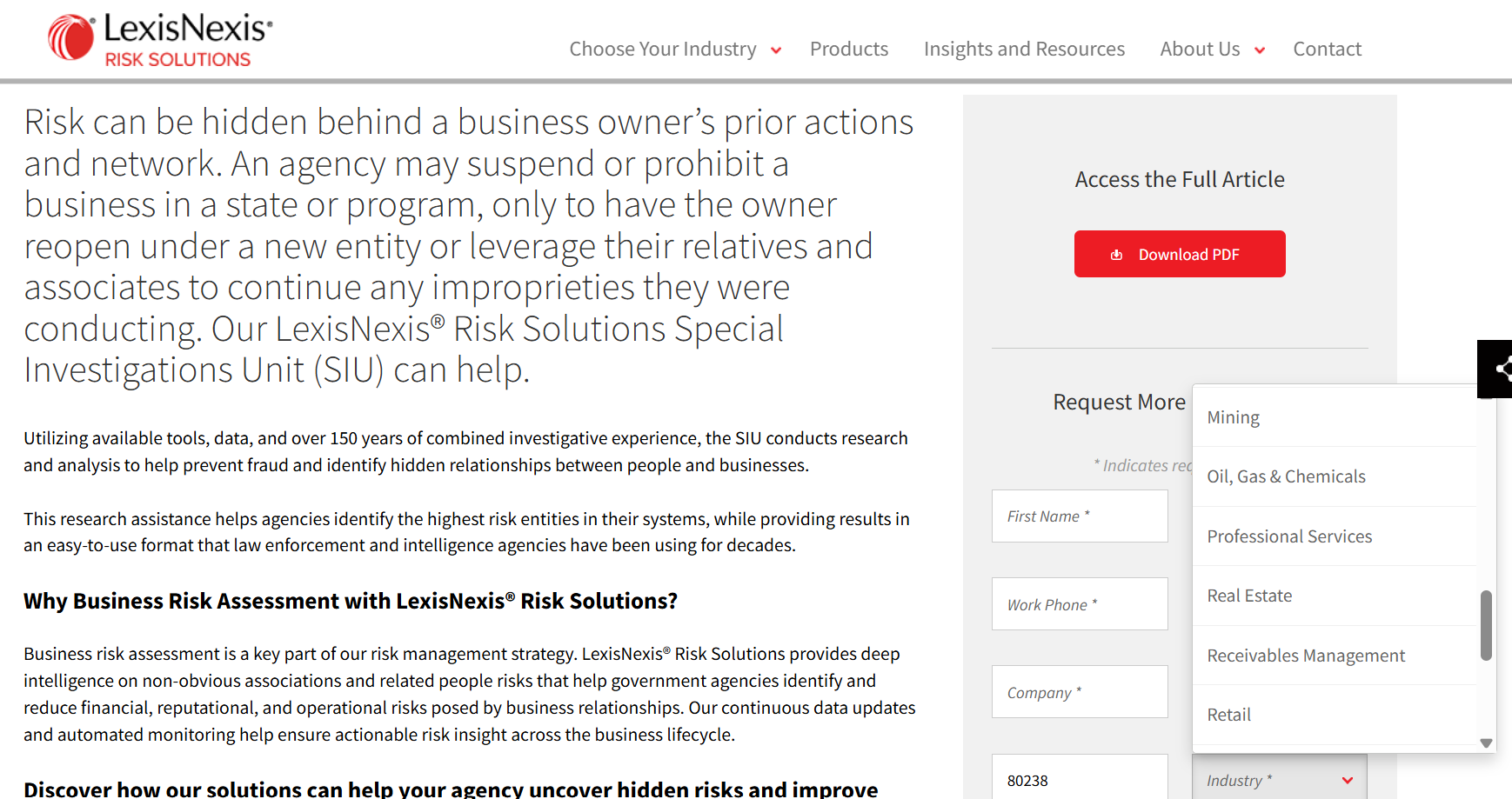
This is a group of private analysts with access to ALPR data around the country, available for hire by private companies and law enforcement agencies to work LexisNexis's trove of data, including LPR and police report data from local municipalities. LexisNexis says the SIU helps clients mitigate "business risk" using "deep intelligence on non-obvious relationships" for the private entities that hire it.
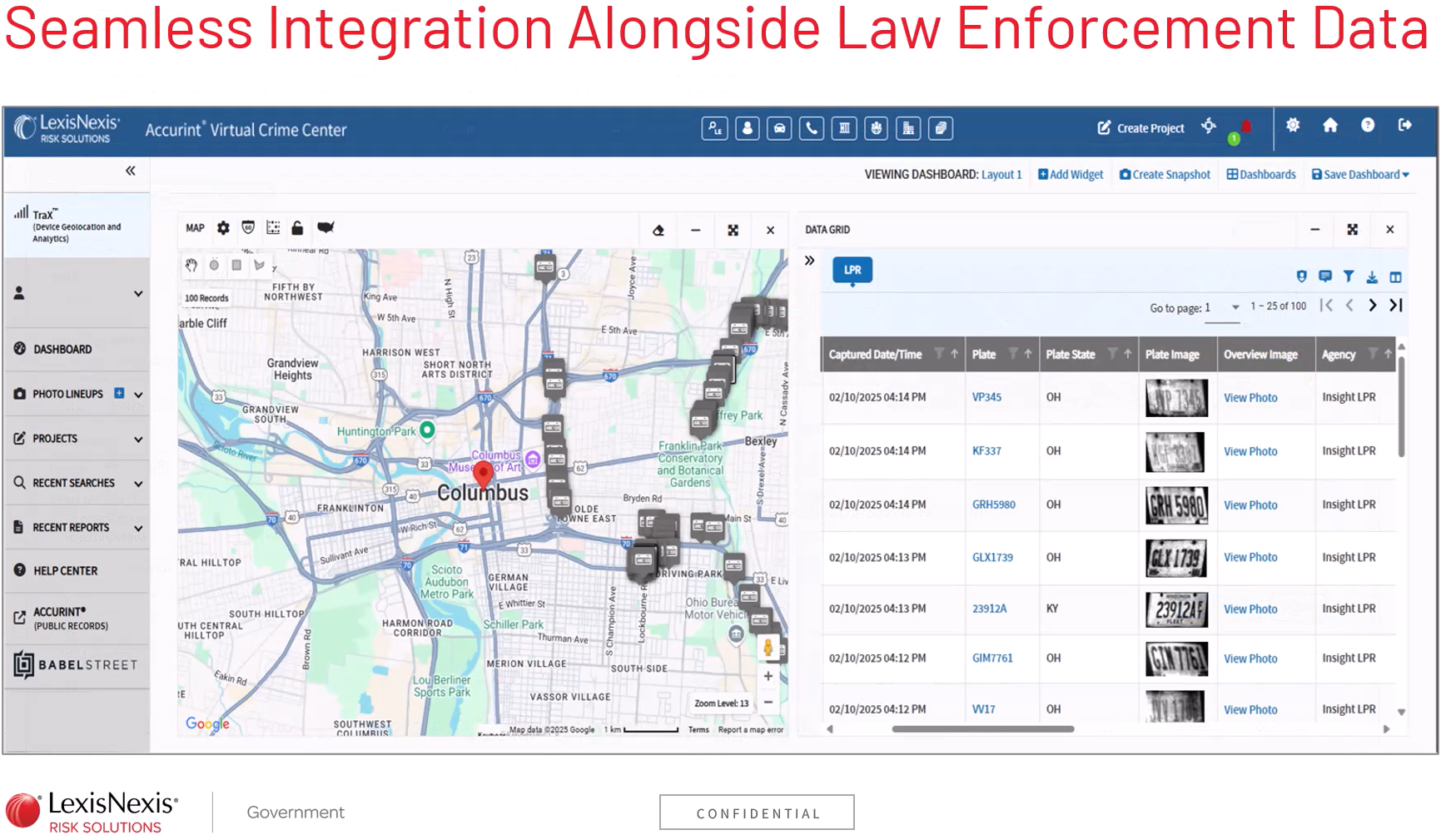
02:36 · Tracking people using ALPR data
"Using InsightLPR data, a pattern of life and vehicle movement can easily be visualized in an Accurint Virtual Crime Center dashboard."
Flock sells a nearly identical product to InsightLPR. Flock has fewer data sources, yet claims its ALPR products focus on "vehicles, not people" and "do not and cannot track vehicles, much less individual people."
03:00 · Enter the FBI: tying ALPR data to 100 million police reports
- AVCC holds over 100 million records from local police departments, from 911 call data to full police reports.
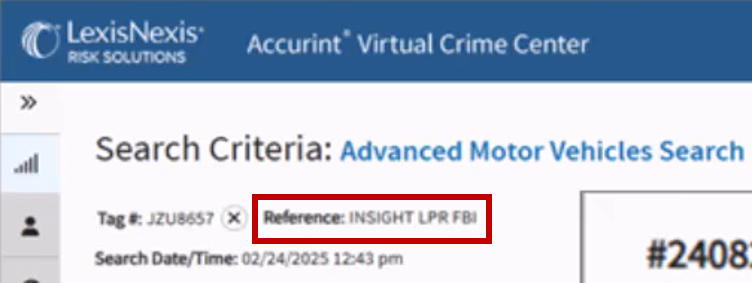
- In the example, the same Ohio license plate, reported stolen on November 4, 2024, is queried three months later in a screenshot at the three-minute mark. The listed reason for the search reads "INSIGHT LPR FBI," which points to use of the system either as a demonstration or in support of an FBI investigation.
03:24 · No-limit hotlists: a nationwide dragnet
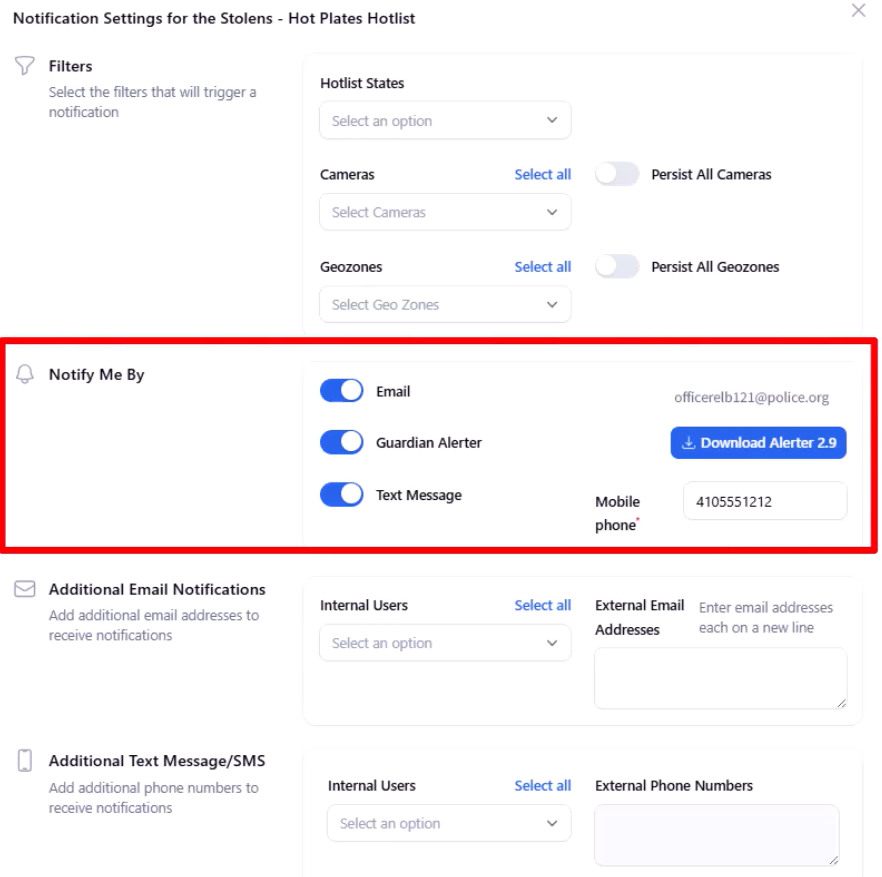
A hotlist lets an officer enter any license plate and receive immediate alerts if that vehicle is scanned. The portal appears to let the user select all cameras and geozones, setting up a nationwide alert for any time a plate is read by a stationary or vehicle-based ALPR camera, including the ones hidden in vehicle grills.
03:40: "There is no limit to how hotlists can be used to monitor any vehicle of interest."
04:25 · Data on minors and victims
The video shows data on a man from Ohio with 59 interactions with police departments that provide their local data to LexisNexis. The example used in this public video is a real person in Ohio who did not appear to be in federal or Ohio state prison at the time of this article. Across the various police interactions, he is listed as a "Suspect," "Victim," "Arrestee," and "Caller," which shows the system captures data on all parties, including victims, witnesses, and 911 callers.
The video states the records "date back to 2014, when the subject was just 13 years of age." (04:40)
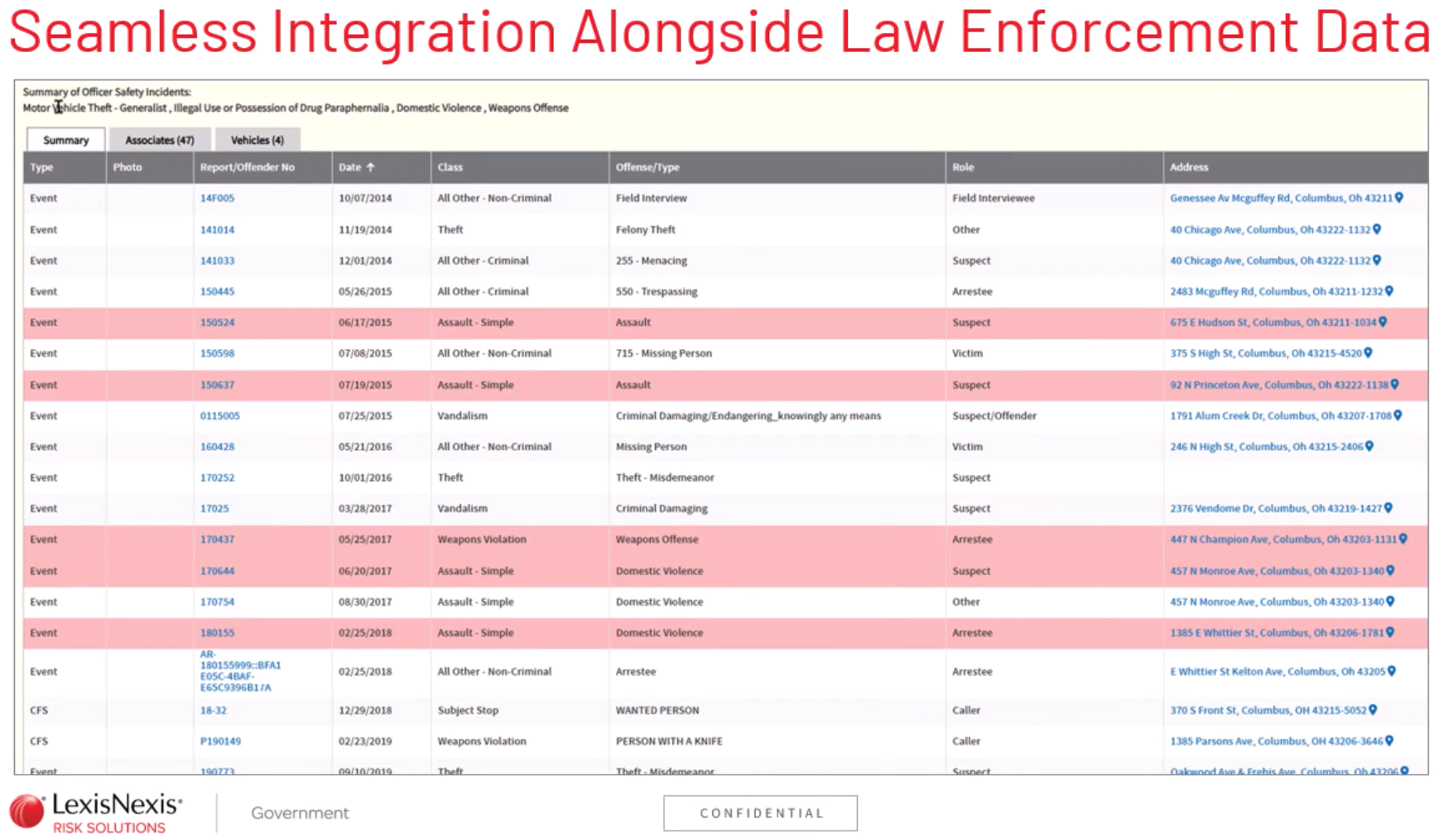
The left-most column shows the type of data:
- Event: Police reports, typically copied from a Records Management System (RMS), which is how police agencies document their work. This includes report narratives, victim statements, and more.
- CFS: Calls for Service from a Computer-Aided Dispatch (CAD) system. A record is created, and shared with LexisNexis, every time someone calls 911. This includes caller details and any individuals they mention during the call.
04:50 · ALPR geofences: a constitutional quagmire
The GeoSearch feature lets law enforcement locate all vehicles that were near a crime, similar to a tower dump or geofence warrant, where police pull every phone that was near a scene. It sweeps up anyone located near a crime, whether or not they are under suspicion.
In June 2026, the U.S. Supreme Court ruled in Chatrie v. United States that pulling cell phone location data for everyone near a crime scene is a search under the Fourth Amendment. That precedent has not yet been litigated as it applies to ALPRs.
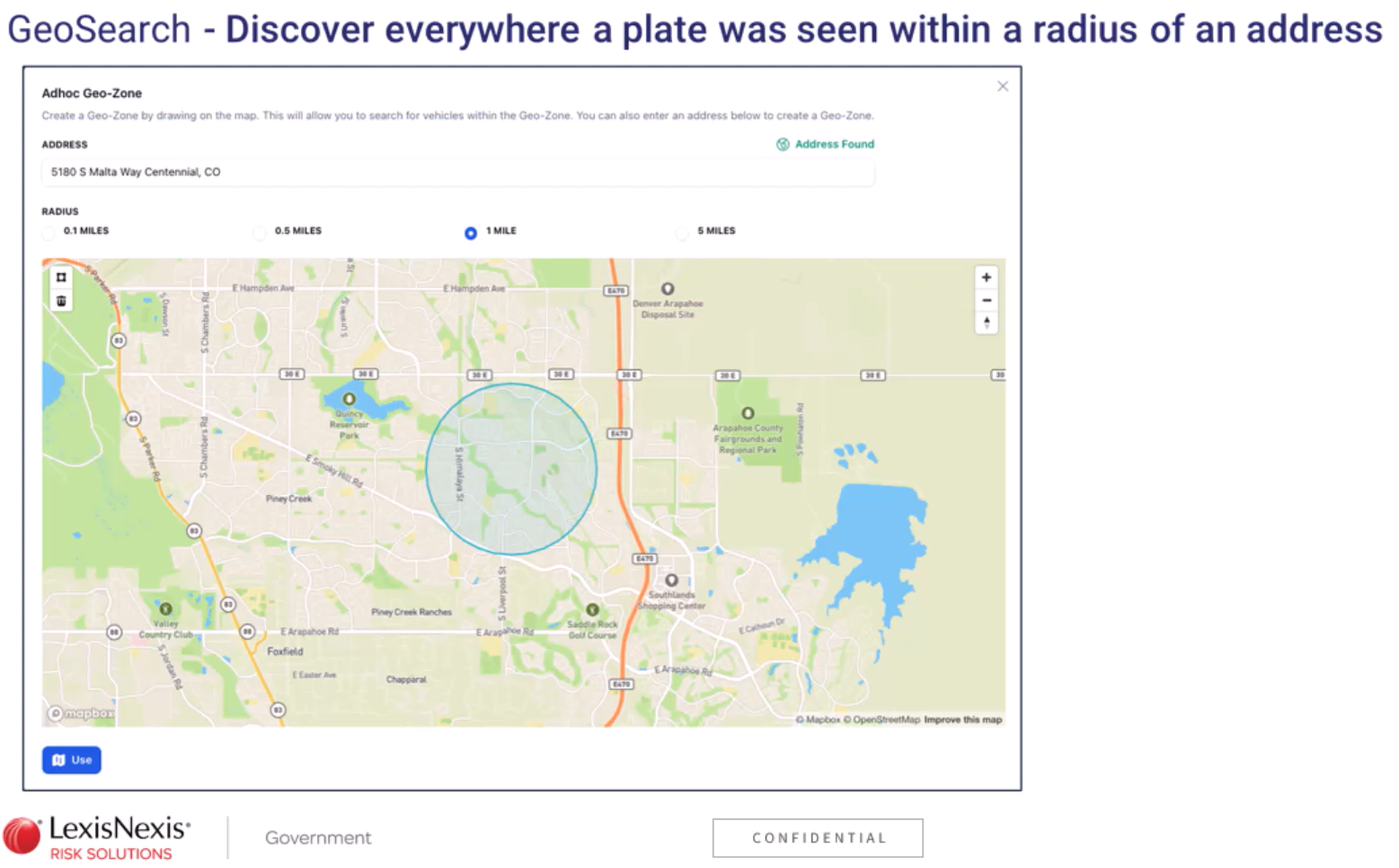
05:08 · Tracking victims and witnesses
LexisNexis says InsightLPR's pattern of life analysis can provide locations for suspects, witnesses, and victims, including outside the agency's jurisdiction. This confirms the ability to drop a nationwide location dragnet on vehicles that are being scanned by covert cameras on tow trucks and repo vehicles.
A pattern of life analysis tracks when people move, how they get there, where they go, and how long they stay. The same data can place people at churches, gun stores, health clinics, and stores.
05:24 · Convoy analysis
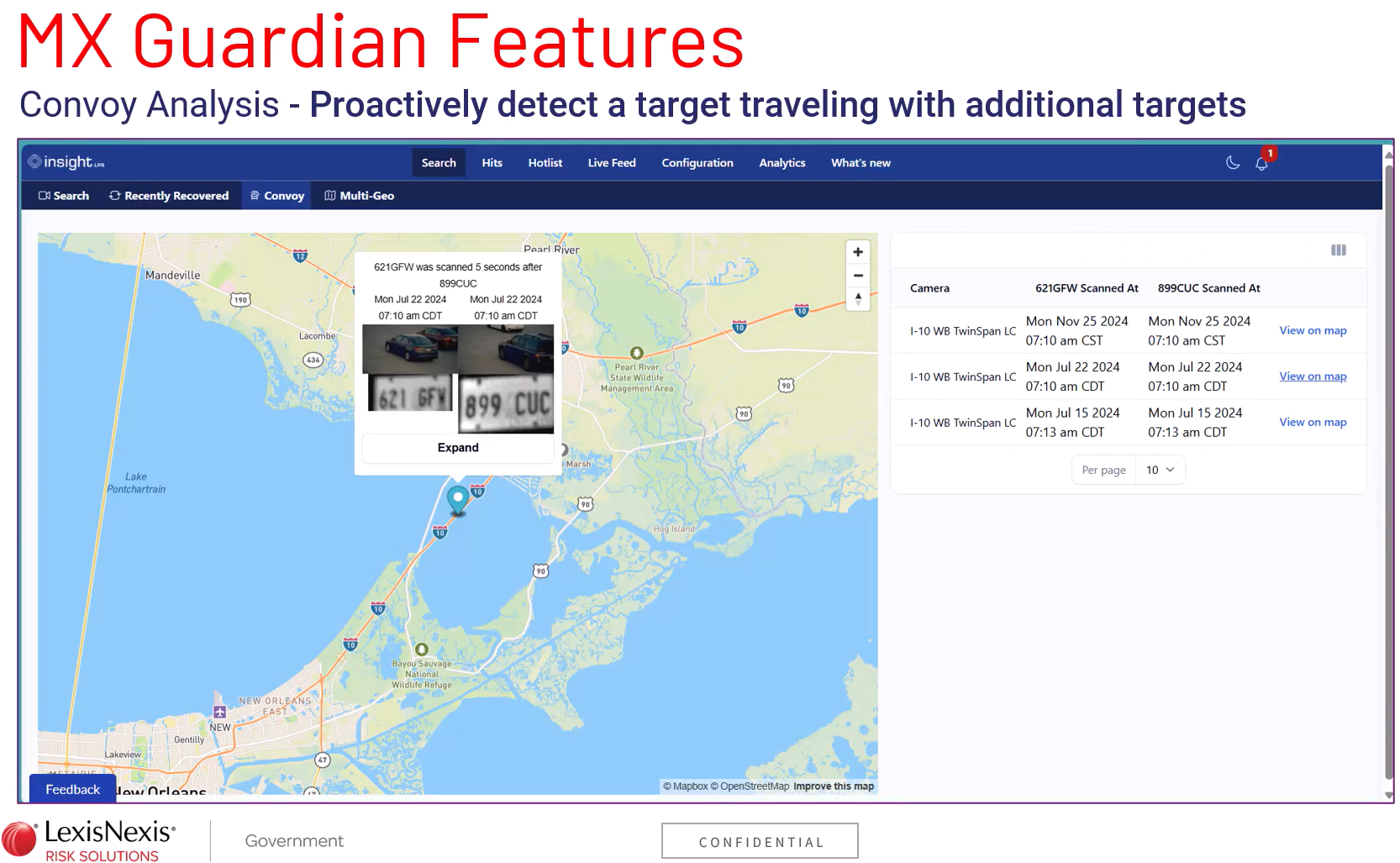
Convoy analysis tells you whether two vehicles are seen together regularly. If you happen to drive across a bridge around the same time as someone who commits a crime, you may be listed as a person of interest in the convoy tracker. If you park in the same lot as a coworker and they commit a crime, convoy analysis will list your vehicle as one frequently seen with the suspect. The same goes for a random vehicle that parks on the same street, or happens to be at the same store as you when the tow truck drives through with its ALPR camera.
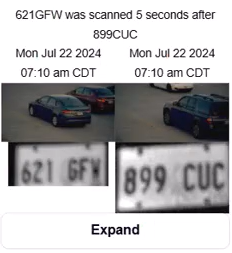
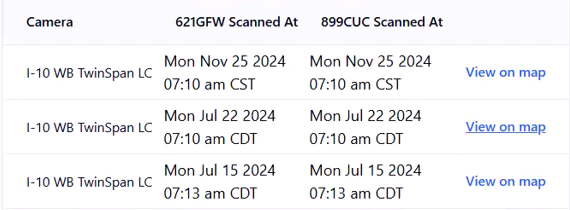
The cameras in the demonstration appear to be on I-10 westbound on the Twin Span bridge.
Conclusion
This is one of several webinars and demos where LexisNexis shows a flippant disregard for data privacy and for the CJIS compliance contracts it signs, displaying real people's data in publicly accessible videos and demonstrations. The videos show that the LexisNexis app store of surveillance, which the company calls the Public Safety Marketplace, has added several mass surveillance data sources, InsightLPR among them.
Laws in states like Minnesota dictate how license plate location data must be treated when law enforcement collects it. InsightLPR provides the data laundering loophole agencies need: police can avoid accountability and regulation by purchasing the data from a private vendor. The result is a fleet of location data privateers, paid to drive around and collect license plate data to sell to InsightLPR, which packages it and sells it to law enforcement across the country to "monitor any vehicle of interest" and to create a "pattern of life and vehicle movement."
The information provided to police is regularly wrong. Each LexisNexis report carries a header about data accuracy, and it notes that even when a judge orders someone's record sealed or expunged, the record is still available to thousands of law enforcement agencies through LexisNexis. The warning reads:
Important: The Public Records and commercially available data sources used on reports have errors. Data is sometimes entered poorly, processed incorrectly and is generally not free from defect. This system should not be relied upon as definitively accurate. Before relying on any data this system supplies, it should be independently verified. [...] The criminal record data in this product or service may include records that have been expunged, sealed, or otherwise have become inaccessible to the public since the date on which the data was last updated or collected.

Local police do not have the experience, knowledge, or oversight to be in the mass surveillance business. But they do have money, and as long as they are willing to pay, companies like LexisNexis and InsightLPR will be there to sell sensitive data that would normally require a search warrant. They let police pay their way around the Fourth Amendment. Without a court looking at a case to decide whether it rises to probable cause, police can run these searches for any reason, or no reason at all.
Have a tip on a data broker, abuse of a surveillance system, or the violation of sanctuary laws using private technology? Reach out to tips@fineprint.report.
Full transcriptAuto-generated captions from the LexisNexis video. Transcription errors left as is.Show
- 00:07
- With the Accurint and Public Safety Marketplace Edition of Insight LPR Data, accurate Virtual Crime Center users have access to the integration of Insight LPR’s Robust Commercial
- 00:19
- License Plate Reader data within Accurint Virtual Crime Center. This also includes access via single sign-on to MX Guardian, which is the web-based application offered by inside LPR
- 00:35
- from an advanced Motor Vehicle Search. LPR results are now integrated alongside law enforcement contributed governmental and non-governmental data within
- 00:46
- accurate Virtual Crime Center. The Insight LPR MX Guardian Solution allows advanced searching features and provides the ability to search by plate.
- 00:58
- Plate state, make a vehicle, color, and vehicle type, such as sedan truck or SUV. It also provides investigators and analysts the ability to search by location similar
- 01:13
- to a cell phone tower dump identifying vehicles in a defined area at a specified date and time providing investigative leads
- 01:22
- where none may have been known. After entering a plate of interest or a license plate number, users can search by state
- 01:31
- where the plate was issued or search a partial plate, often referred to as a wild card search. Users can create a customizable date range to refine search efficiency, restrict a search to your organization only, or use the power of all available cameras from other organizations as well as the robust commercial reads for fixed camera searches. Advanced Search allows a user to search by make color and vehicle type, for example, van Truck, SUV or motorcycle plate read results. Quickly identify the scan date and associated location along with a photo of the plate for validation and a location, image, image, and location information may also be able to identify a potential association to a residence or a business.
- 02:28
- Conducting a search of the address within Accurate Virtual Crime Center may reveal additional investigative leads. Using Insight LPR Data, a pattern of life and vehicle movement can easily be visualized in an accurate virtual crime center dashboard with inside LPR, integrated API. Accurate. Virtual Crime Center, robust public, unique, and law enforcement data is displayed alongside commercial data plate reads with hot list capabilities. Event, and call for service Data can provide context and valuable data relating to vehicles and their association to events and people. MX Guardian Target plate alerting and hotlist uploads provide real-time alerting for suspect vehicles, stolen motor vehicles or vehicles of interest. When a license plate is read by sending a text or email alert to an investigator or any other designee, they define this feature creates immediate and actionable intelligence. Immediate notifications can be selected by the user and include email, text message, and the MX Guardian desktop Alerter. There is no limit to how Hotlist alerting can be leveraged to monitor any vehicle of interest. Hotlist Alerting provides immediate actionable intelligence in the case of a stolen vehicle or a vehicle related to a warrant.
- 03:53
- Suspect with a location in real time alerts can also be delivered to anyone via SMS and email. The MX Guardian Alerter can be downloaded to a user’s desktop to provide pop-up alerting As soon as a Hotlist vehicle has been detected. With accurate Virtual Crime Center, investigators and analysts can quickly associate a vehicle with a suspect, victim, associate, or prior criminal events and calls for service pictured. Here in Accurate Virtual Crime Center, our suspect is identified as an officer safety risk. Through his extensive history of law enforcement contributed data, the subject has 59 law enforcement contributed events from four different agencies, numerous officer safety events and records that date back to 2014 when the subject was just 13 years of age. The MX Guardian Geo search capability and multi-location Geo search Analytics provides the capability to discover all plates that were scanned within a defined radius or at a location or multiple locations of interest at a specific date and time pattern of life analysis. Using Insight LPR data can provide possible locations for fugitives persons of interest, witnesses, and victims, and may also connect a target to criminal activity outside of your own jurisdiction. MX Guardian Convoy Analytics can proactively detect if target vehicles are traveling with or associated with other vehicles based on advanced time, date and location analysis, linking your target and co-conspirators or associates to expand investigative insights for training on accurate Virtual Crime Center with inside LPR data. Contact the Public Safety Education team.
Sources
The source is a LexisNexis Risk Solutions demonstration video of the InsightLPR integration with Accurint Virtual Crime Center, posted to the company's Vimeo account and since hidden. FinePrint's archived copy is on the Internet Archive. Contract and capability documents cited above are hosted on FinePrint's DocumentCloud: the VA procurement notice, the U.S. Navy performance work statement, the LexisNexis jail booking data sheet, and the LexisNexis description of its contributor base. This article first ran in the FinePrint newsletter on September 4, 2026. For the broader pipeline that feeds AVCC, see The Accurint Files and the Police Data Pipelines project.
Newsletter
Findings and features, in your inbox.
New findings and monthly features from the FinePrint newsroom. Free, no spam, unsubscribe anytime.
Delivered by Substack.