Police Data Pipelines
ICE Pulls a LexisNexis Dossier Every 76 Seconds
ICE's own usage records show how the agency mines local police and jail data through a private data broker. Its monthly arrests have more than tripled since.
76seconds
How often, on average, ICE pulled a full LexisNexis dossier on a person, around the clock, for six months.
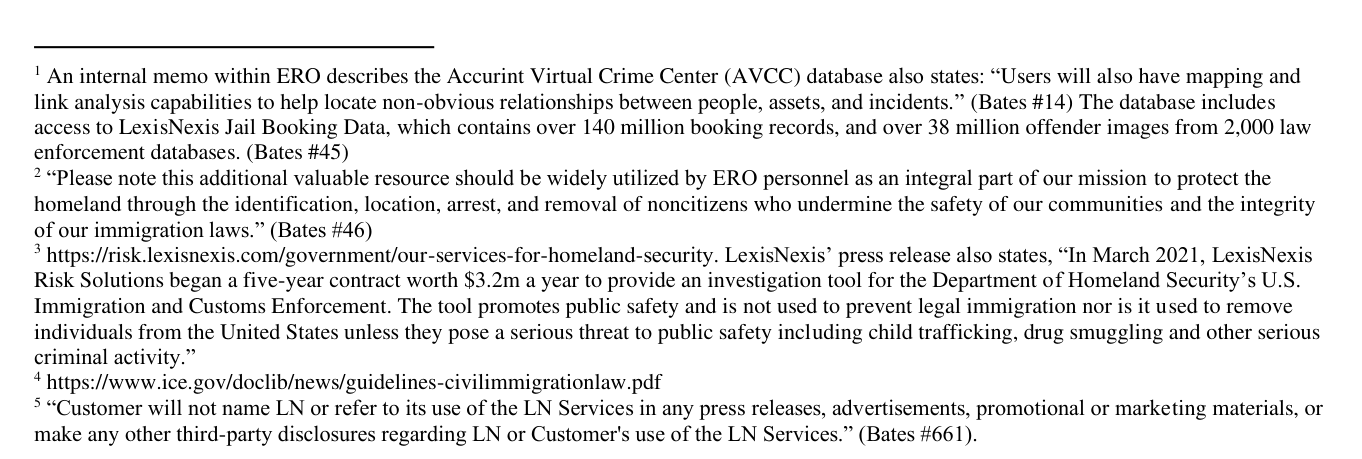
On September 16, 2024, police in Belleville, Illinois, arrested a man for DUI and battery on an officer and booked him into the St. Clair County jail. The next day, according to a federal criminal complaint, an ICE deportation officer learned of the arrest "after searching St. Clair County, Illinois jail bookings on LexisNexis." The officer matched the booking photos against federal records from a 2019 removal, and the man was later charged with illegal reentry. FinePrint found no warrant in the court record for that search.
Illinois' TRUST Act, strengthened in 2021, restricts local jails from sharing that kind of information with civil immigration enforcement unless there's a criminal warrant. The jail didn't need to call ICE. LexisNexis already had the booking.
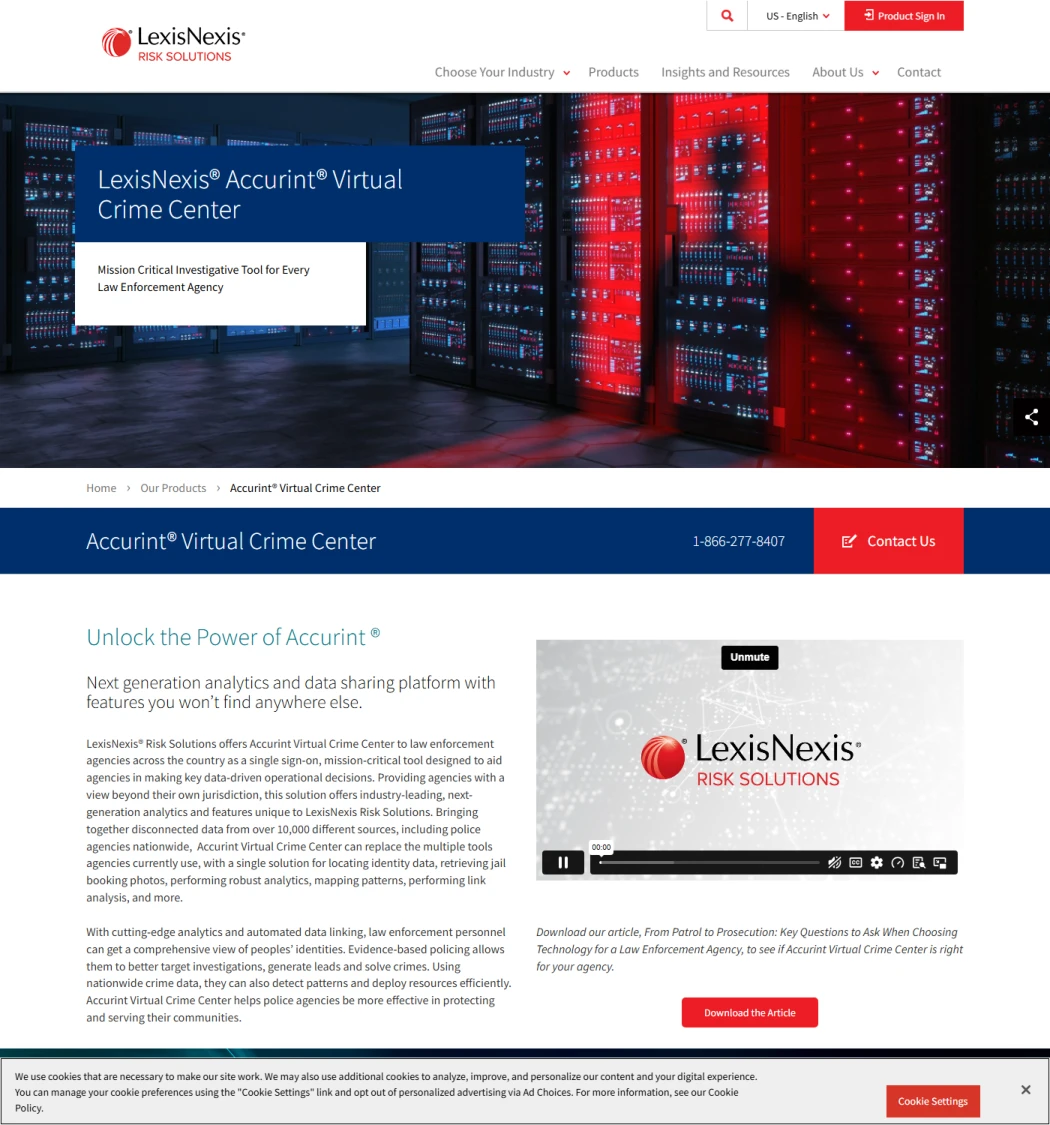
ICE's own records show how routine that kind of search has become. Between November 2022 and April 2023, ICE ran 826,086 searches through the Accurint Virtual Crime Center, a law enforcement search tool sold by the data broker LexisNexis Risk Solutions, and pulled 247,134 reports. Of those reports, 205,042 were full dossiers on a person, one every 76 seconds around the clock. Another 23,284 lookups went straight into jail booking records, about 129 a day. The system counted 5,477 active ICE users in 2023.
The numbers come from a LexisNexis usage report that ICE released under the Freedom of Information Act in June 2025 (request 2025-ICLI-00054), part of a records production to the legal nonprofit Just Futures Law. It's the most recent hard count of how ICE uses the platform, and it describes a much smaller agency than the one operating today. ICE averaged about 14,200 arrests a month in fiscal 2023. In July 2026 it made 49,571. The license that served 5,477 active users in 2023 now authorizes up to 11,200.
By the numbers
ICE on LexisNexis, Nov. 2022 to Apr. 2023- 826,086
- searches
- about 4,560 a day
- 247,134
- reports
- about 1,370 a day
- 205,042
- full dossiers
- one every 76 seconds
- 23,284
- jail booking lookups
- about 129 a day, a floor
- 5,477
- active ICE users
- in 2023; 11,200 seats now
- 3,418
- people matched in bulk
- from 12 uploaded spreadsheets
Source: LexisNexis usage report released by ICE under FOIA, request 2025-ICLI-00054 (June 2025). Batch figure covers Nov. 2021 to Jan. 2024. Seat count from ICE’s August 2026 contract notice.
A data broker is a company that collects personal information from many sources and sells access to it. LexisNexis Risk Solutions is one of the biggest. Its investigative search product is called Accurint, and the law enforcement version is the Accurint Virtual Crime Center, or AVCC. In other words, AVCC is one search box sitting on top of several very different piles of data: addresses, relatives, phones and vehicles from public and commercial records, plus local police reports and jail bookings that most people don't know are in there.
Spreadsheets of People
The strangest records in the release aren't one-at-a-time lookups at all. Twelve automated emails show that between November 2021 and January 2024, an account at the headquarters of Homeland Security Investigations, ICE's criminal investigations arm, uploaded spreadsheets of people to LexisNexis's batch system and had every name matched against Accurint in one pass.
The twelve jobs ran 3,744 names. Accurint matched 3,418 of them, a 91 percent hit rate. All twelve ran under the Biden administration.
Each confirmation came from a sender called "LexisNexis Batch R3 OPC," was addressed to the customer account DHS-ICE-HSI-HQ-INV PRG TOC I, and reported the number that mattered: "Total Advanced Person Hits," or how many of the uploaded people the system found. Two of them:
- From
- LexisNexis Batch R3 OPC
- Customer name
- DHS-ICE-HSI-HQ-INV PRG TOC I
- Job ID
- 174128315
- Job type
- Online
- Script
- R03_WebWizard_JobRunner.kjb
- File name
- 5M19NR19NK0047_74_Industries_AVCC.csv
- Run date
- 2023-08-28 10:51
- Total records
- 493
- Total Advanced Person Hits
- 462
- Hit %
- 93.71
- From
- LexisNexis Batch R3 OPC
- Customer name
- DHS-ICE-HSI-HQ-INV PRG TOC I
- Job ID
- 181265125
- Job type
- Online
- Script
- R03_WebWizard_JobRunner.kjb
- File name
- Halls_Warehouse_AVCC.csv
- Run date
- 2023-12-10 08:16
- Total records
- 80
- Total Advanced Person Hits
- 76
- Hit %
- 95.00
The analyst who uploaded the files named them. Six filenames carry what look like HSI case numbers, and two pair a case number with a company name. Several line up with real businesses:
- 74 Industries: 74 Industries Inc. is a garment contract manufacturer at 900 74th Street in North Bergen, New Jersey, listed in business directories with 20 to 49 employees. ICE uploaded 493 names under that label, paired with case number 5M19NR19NK0047. A case number with the same stem, ending in 0051, ran 585 more names about five months later.
- Hall's Warehouse: Hall's Warehouse Corp. is a cold storage company in South Plainfield, New Jersey, operating since 1927 with 1.7 million square feet of warehouse space. Americold bought it for $480 million in 2020. Its file had 80 names, uploaded at 8:13 on a Sunday morning.
- Grande Produce: Grande Produce Ltd. Co. is a produce importer in San Juan, Texas, with about 200 employees. Its file had 238 names.
- Pure Health LLC, Jose's, and CPG are too generic to tie to one business. CPG is also a common abbreviation for consumer packaged goods.
FinePrint found no public record of an enforcement action against any of these companies. The analyst typed these filenames, and the match to a specific business is by name only.
The record counts don't track the size of the companies. A garment shop with fewer than 50 employees produced 493 names, and a cold storage company with 1.7 million square feet of warehouses produced 80. These probably aren't simple payroll rosters. The account belongs to HSI's headquarters organized crime side, which handles human smuggling, labor trafficking, and worksite enforcement. The people on these lists could have been suspects, workers, or trafficking victims. The emails don't say, and the keystroke is the same either way.
Chart
Twelve spreadsheets, 3,744 people
An HSI headquarters account uploaded lists of names to LexisNexis's batch system. Accurint matched 3,418 of them, 91 percent.
| Run date | Filename | Records submitted | Matched | Hit rate |
|---|---|---|---|---|
| Nov 9, 2021 | AVCC.csv | 1,358 | 1,353 | 99.6% |
| Dec 15, 2021 | Joses_AVCC.csv | 30 | 17 | 56.7% |
| Jun 28, 2022 | 5M19PR20HI0002_B_B.csv | 140 | 112 | 80.0% |
| Jul 6, 2022 | 5M19N820HG0006.csv | 149 | 126 | 84.6% |
| Oct 27, 2022 | Accurint_SS_.csv | 330 | 288 | 87.3% |
| Mar 13, 2023 | 5M19N820SU006.csv | 102 | 98 | 96.1% |
| Jul 7, 2023 | GRANDE_PRODUCE.csv | 238 | 189 | 79.4% |
| Aug 28, 2023 | 5M19NR19NK0047_74_Industries_AVCC.csv | 493 | 462 | 93.7% |
| Nov 22, 2023 | CPG_AVCC.csv | 195 | 175 | 89.7% |
| Dec 10, 2023 | Halls_Warehouse_AVCC.csv | 80 | 76 | 95.0% |
| Jan 12, 2024 | 5M19NR19NK0051.csv | 585 | 479 | 81.9% |
| Jan 23, 2024 | 5M19N820SU0002_Pure_Health_LLC_AVCC.csv | 44 | 43 | 97.7% |
ICE's new contract makes bulk matching a standard feature: it requires LexisNexis to support batch requests and system-to-system connections.
What One Search Returns
The single biggest product on ICE's bill was the Flat Rate Comprehensive Report, which is what most people picture when they hear "data broker file." ICE pulled 200,544 of them in six months, plus 4,498 sent straight to a dashboard. LexisNexis publishes a sample law enforcement report, and the section list runs long:
- Identity: names associated with the subject, and other people tied to the subject's Social Security number
- Addresses: every known address, current and past, with the current residents at each one and a census profile of the neighborhood
- Phones: numbers, phone type, and carrier
- Criminal history: possible criminal records and sex offender registrations
- Vehicles and licenses: driver's license, registered vehicles, crash reports, concealed weapons permits, professional licenses, FAA certifications, aircraft, and watercraft
- Civic life: voter registration and hunting and fishing permits
- Money and property: bankruptcies, liens, judgments, UCC filings, and property owned
- Other people: relatives, associates, neighbors, and coworkers listed under "People at Work"
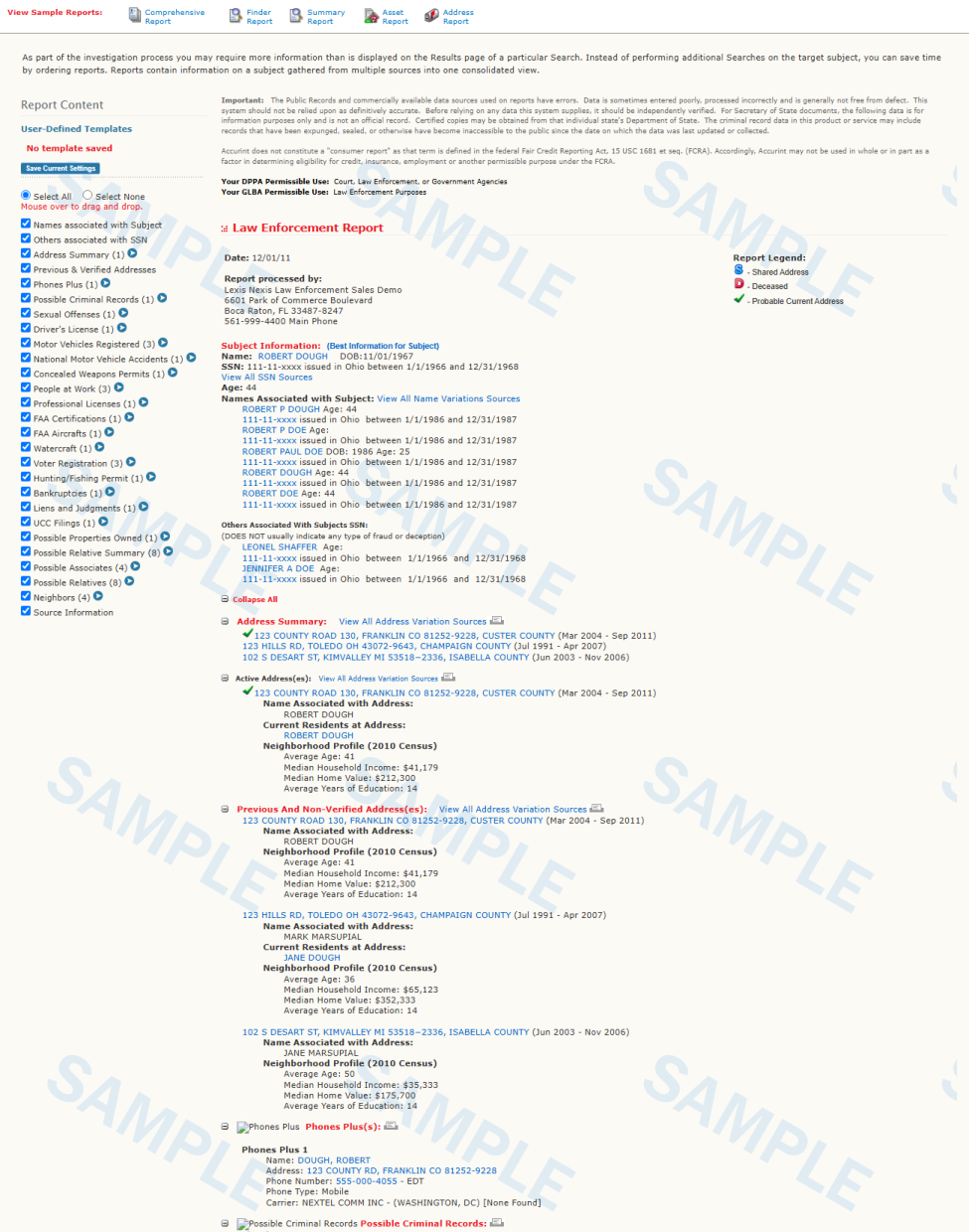
Every one of those reports names people who aren't the subject: a sister, a roommate, the family two doors down. The header on the same sample page warns that the underlying data "is generally not free from defect" and that its criminal record data "may include records that have been expunged, sealed, or otherwise have become inaccessible to the public."
Dossiers were one slice of what ICE pulled. Sorted by what they touch, the searches and reports break down like this:
Chart
What ICE looked up
Person searches and dossiers dominate. Jail bookings are the smallest category here, and the one that grew fastest since 2021.
| Category | Searches and reports | Per day |
|---|---|---|
| People (Advanced Person Search) | 521,236 | 2,880 |
| Full dossiers (Comprehensive Reports) | 205,042 | 1,133 |
| Phone numbers and carriers | 194,893 | 1,077 |
| Vehicles | 48,472 | 268 |
| Email addresses and online accounts | 37,436 | 207 |
| Businesses | 31,799 | 176 |
| Jail booking records | 23,284 | 129 |
Where the Records Come From
Addresses and phone numbers come from the commercial records LexisNexis has sold for decades. The police and jail records are the part most people don't know about, and they reach LexisNexis by three roads.
Diagram
Three pipes into one search box
Police records, jail bookings and prison records reach LexisNexis by different roads and come out together, searchable by any agency that pays for access.
- 1Local police
Incident reports, arrests, 911 and dispatch calls, crash reports, with victim and witness details
How
A data-sharing addendum sends records to the Public Safety Data Exchange (PSDEX), often daily
More than 2,500 agencies, LexisNexis says
- 2County jails
Name, mugshot, charges, custody and release status
How
Victim-notification (VINE) feeds through Appriss, plus direct jail feeds
Local bookings from 41 states and D.C., LexisNexis says
- 3State prisons
State Department of Corrections records
How
Corrections data carried in Jail Booking Search
27 states, LexisNexis says
LexisNexis Risk Solutions
Accurint Virtual Crime Center (AVCC)
One search box over identity records, police reports and jail bookings. LexisNexis claims 1.5 billion entities and records in its police exchange and 140 million jail booking records.
ICE
826,086 searches in six months of 2022 and 2023. The 2026 license allows up to 11,200 users and API connections to Palantir.
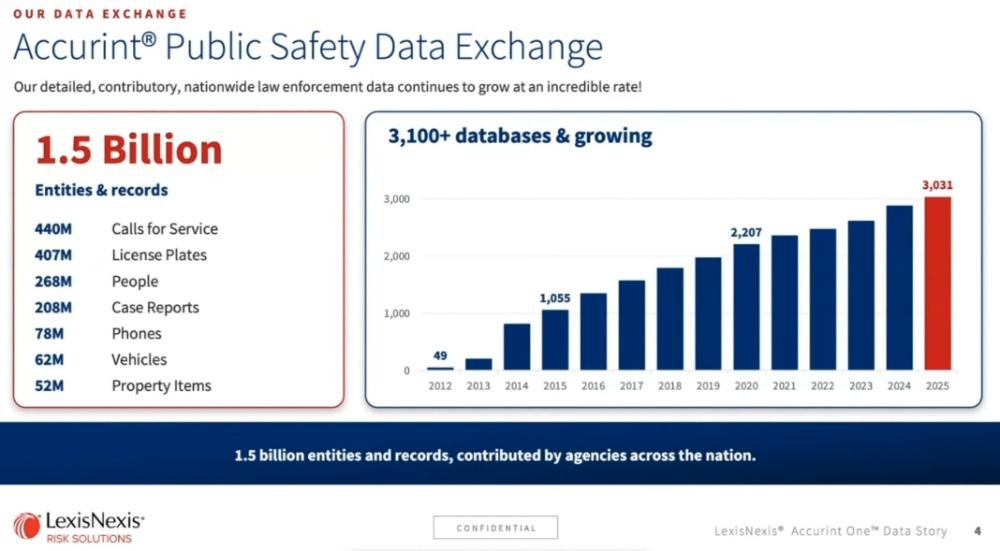
1. Local police, through the Public Safety Data Exchange. When a police department signs LexisNexis's standard AVCC data-sharing addendum, it agrees to "contribute public safety information" to the company's Public Safety Data Exchange, or PSDEX, and grants LexisNexis an irrevocable license to use it. From then on, the department's records system sends incident reports, arrests, crash reports, and 911 and dispatch calls to LexisNexis automatically. A LexisNexis account manager wrote in March 2026 that more than 2,500 agencies contribute. In Federal Way, Washington, FinePrint found that LexisNexis emails the department a receipt every morning confirming the previous day's police reports were copied into its database, victim details and witness information included. Records that land in the exchange become searchable by agencies that pay for AVCC. ICE pays.
In November 2026, LexisNexis told agencies on an Accurint One webinar that the exchange holds 1.5 billion entities and records, including 440 million 911 and dispatch calls, 208 million case reports and 268 million people.
2. County jails, through the victim notification system. Every arrest starts with a booking. The jail records a name, date of birth, mugshot, charges, and custody status, then updates the record when the person is released or transferred. VINE is the free service that alerts crime victims when the person who hurt them is released from jail. To make it work, jails send a company called Appriss a live feed of every booking and release. Appriss Insights, which Equifax bought for $1.825 billion in 2021, also resells that data. Cook County's Appriss contract has a "risk solutions" clause that lets Appriss share jail data with other companies, including LexisNexis Risk Solutions, South Side Weekly reported. Illinois' statewide VINE contract, which runs through June 2028, covers 88 county jails and also lets Appriss share jail records with third parties, the Chicago Sun-Times reported this month. Some agencies feed LexisNexis directly: in Colorado, booking and release times from 87 policing agencies sit in LexisNexis databases that ICE can search, according to the Colorado Immigrant Rights Coalition.
ICE paid extra for the jail feed. In June 2021, it expanded its LexisNexis contract to add real-time incarceration data from Appriss. ICE's written justification, quoted by the ACLU, said that because of "policy or legislative changes," more agencies "do not share information about real time incarceration of foreign-born nationals with ICE."
Those changes are what most people call sanctuary policies. They limit how much local jails help federal immigration enforcement, and many bar jails from holding someone or sharing release dates based on an ICE administrative warrant, which is signed by an ICE officer rather than a judge. When a jail won't call ICE, ICE can read the booking off LexisNexis instead.
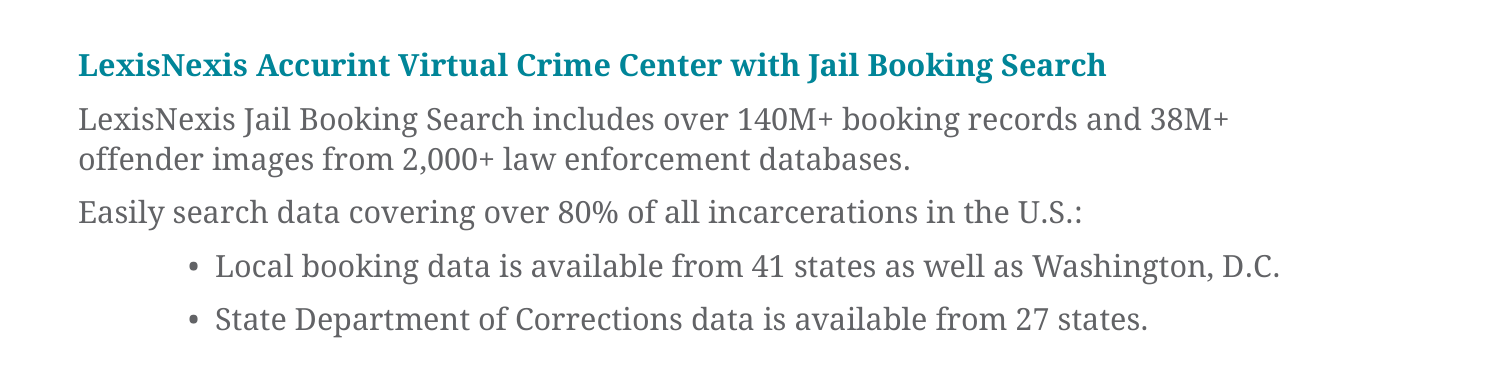
3. State prisons. LexisNexis says it carries Department of Corrections data from 27 states.
Put together, LexisNexis's 2020 AVCC brochure claims its Jail Booking Search holds more than 140 million booking records and 38 million offender images from over 2,000 law enforcement databases, and covers "over 80% of all incarcerations in the U.S." That's the company's own claim, made to sell the product.
Jail Lookups Nearly Tripled
ICE leaned on those jail records harder over time. Logs from 2021, obtained by Just Futures Law and reported by The Intercept, counted nearly 6,000 jail booking lookups over seven months, about 860 a month. In the 2022 to 2023 window, the Jail Booking Search product alone ran about 2,480 a month, nearly triple. All three jail products combined ran about 3,880 a month. Over the same comparison, ICE's total searches fell about 20 percent.
Chart
Jail lookups up, everything else down
ICE's monthly jail booking lookups nearly tripled from 2021 even as its overall searching fell about 20 percent.
| Measure | 2021 (per month) | 2022 to 2023 (per month) |
|---|---|---|
| Jail Booking Search | not broken out | about 2,480 |
| All jail booking lookups | about 860 | about 3,880 |
| All searches | about 173,000 | about 137,700 |
| Jail booking product | Nov 2022 to Apr 2023 | Per day |
|---|---|---|
| Jail Booking Search | 14,866 | 82 |
| Recent Bookings search | 7,198 | 40 |
| Jail Booking Report | 1,220 | 7 |
| Total | 23,284 | 129 |
The 23,284 figure is a floor. It counts only searches that used LexisNexis's jail booking products by name. Comprehensive Reports carry a criminal records section and can surface the same bookings, and the report doesn't break out how often they did.
In 2021, Enforcement and Removal Operations (ERO), ICE's deportation branch, had room for more than 4,200 Accurint users. ICE's August 2026 contract notice clears 7,500 ERO users for jail booking data alone.
Who's Searching
The busiest week was February 23 to March 1, 2023: 49,986 searches and reports from 2,427 active users. Even the slowest full week, the week of Christmas, logged 20,499.
Chart
Six months of ICE lookups
ICE ran between about 148,000 and 206,000 searches and reports every month. The December dip is the holidays.
| Month | Searches | Reports | Total |
|---|---|---|---|
| Nov 2022 | 127,278 | 38,445 | 165,723 |
| Dec 2022 | 113,721 | 34,270 | 147,991 |
| Jan 2023 | 144,051 | 44,403 | 188,454 |
| Feb 2023 | 143,003 | 41,383 | 184,386 |
| Mar 2023 | 159,465 | 46,686 | 206,151 |
| Apr 2023 | 138,568 | 41,947 | 180,515 |
Homeland Security Investigations ran at least 69 percent of the volume. Enforcement and Removal Operations ran at least 25 percent.
The top office was CTCEU, the Counterterrorism and Criminal Exploitation Unit, which tracks people who overstay or fall out of status on student and exchange visitor visas. It ran 80,159 lookups, and six of the 20 heaviest individual users in the agency worked there. When LexisNexis announced the ICE contract in 2021, it said the tool "is not used to prevent legal immigration nor is it used to remove individuals from the United States unless they pose a serious threat to public safety."
Chart
The heaviest users: a visa status unit
CTCEU, the HSI unit that tracks people who fall out of status on student and exchange visas, ran more lookups than any other ICE office.
| Office | Division | Searches and reports |
|---|---|---|
| HSI HQ, student and exchange visitor unit (CTCEU) | HSI | 80,159 |
| San Antonio | HSI | 59,184 |
| New York | HSI | 46,410 |
| ERO HQ, National Criminal Analysis and Targeting Center | ERO | 43,548 |
| San Diego | HSI | 38,908 |
| Phoenix | HSI | 37,475 |
| El Paso | HSI | 34,726 |
| Detroit | HSI | 31,910 |
| Los Angeles | HSI | 29,520 |
| Boston | HSI | 28,602 |
A per-user spreadsheet in the release shows how that played out in a single month. In April 2023, about 3,900 ICE accounts ran at least one query. Four of them ran more than 1,000, and two of those four sat in CTCEU. The heaviest single user ran 1,381 lookups that month, about 46 a day including weekends. The typical account ran about 18.
What It Costs People
The cost of all that searching lands on more people than the ones ICE is looking for.
- Family and neighbors: Every Comprehensive Report lists relatives, associates, neighbors, and coworkers. At about 1,100 reports a day, ICE was pulling in people who were never the subject of any search.
- Records that were supposed to be gone: LexisNexis's own header says its criminal data may include records that have been expunged or sealed. A judge can clear a record in court and it can still turn up in a dossier.
- Errors: The same header says the data is "sometimes entered poorly, processed incorrectly and is generally not free from defect," and tells users to verify it independently. The usage report counts searches, not checks.
- No audit trail for the cities feeding it: Contributing departments can't see who searched their records. Asked to audit outside agencies' use of its data, the Downers Grove, Illinois, police department answered: "We are not aware of any function that will allow us to audit external agencies and how they used the data they see."
- No way to take it back: The contributor addendum grants LexisNexis an irrevocable license. A city that cuts off its feed can stop sending new records, but it can't pull back what it already sent.
- A reason not to call 911: The exchange holds 440 million calls for service, and police reports carry victim and witness details. For an immigrant family, calling for help or giving a statement can create a record that ICE can search.
- Sanctuary laws with a side door: Illinois and Colorado limit what jails tell ICE. ICE's own justification for buying jail data cited those limits, and in Belleville the booking reached ICE anyway.
Bigger Now
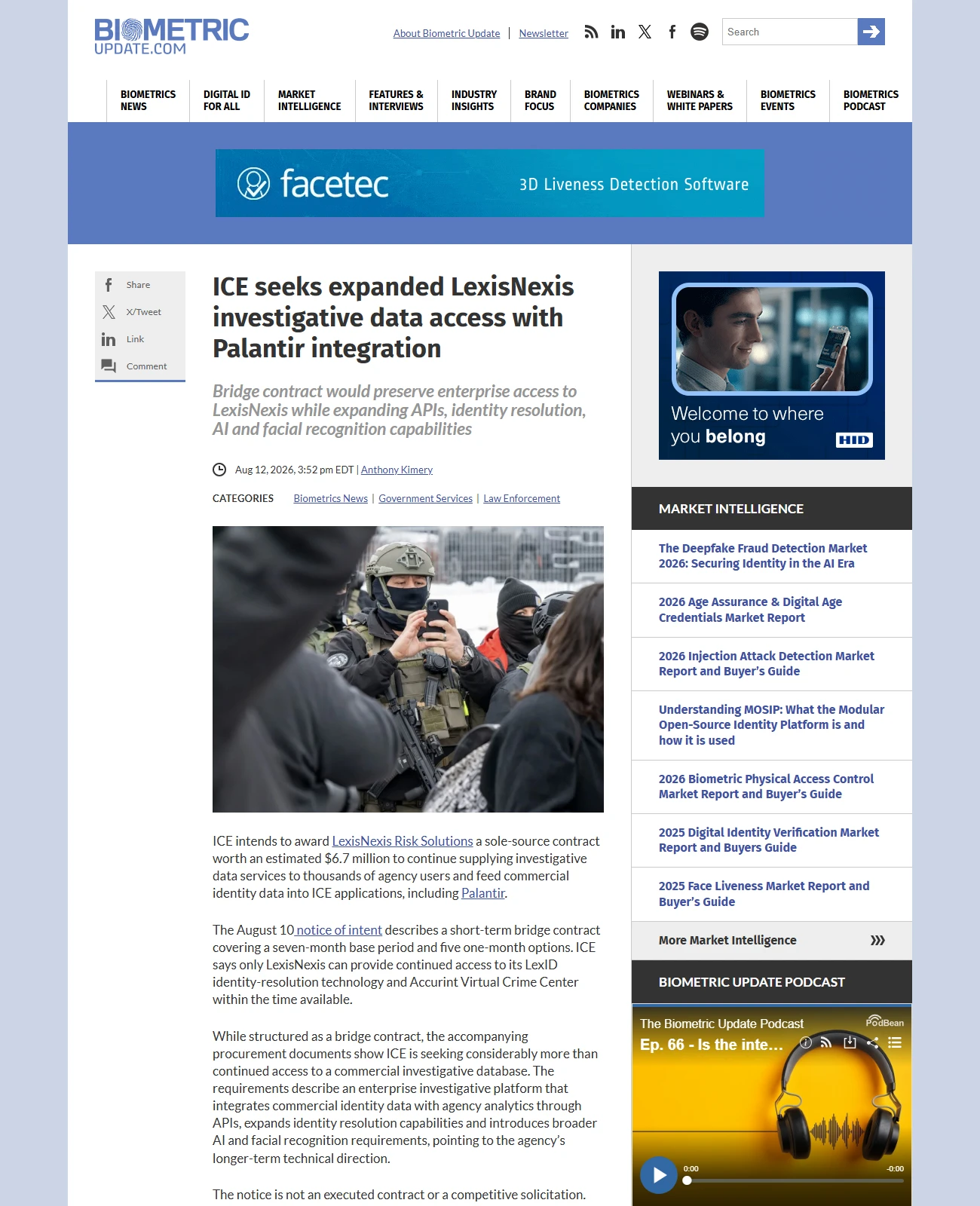
ICE's 2021 LexisNexis contract started at $16.8 million in February 2021 and grew to $24.5 million by the time it ended on August 31, 2026. On August 10, ICE posted notice of a roughly $6.7 million sole-source follow-on to keep access running, and USAspending records the award, contract 70CMSD26C00000009, as signed August 31. The notice:
- sets the license at up to 11,200 users across HSI, ERO, and ICE's Office of Professional Responsibility, with 7,500 ERO users cleared for jail booking data
- requires the database to connect by API to "ICE applications, such as but not limited to, Palantir platform, PenLink, and ICE Data Analytics"
- requires batch requests and system-to-system connections, the same bulk matching HSI ran on its spreadsheets
- asks for facial recognition with bulk image ingestion and one-to-many comparison, which matches one face against a whole database
The new contract lands in an agency with far more people and far more targets. Congress gave ICE about $75 billion through the One Big Beautiful Bill Act in 2025, roughly $30 billion of it for enforcement and hiring. ICE's July 2026 arrests ran about 3.5 times its fiscal 2023 monthly average.
Nobody outside ICE and LexisNexis has a current query count, so FinePrint estimated one two ways from ICE's own numbers. Scaled to seats, if each of the 11,200 authorized users searched at the 2023 per-user rate, ICE would run about 9,300 searches a day. That likely runs high, since not every license is active. Scaled to arrests, if lookups grew in step with arrests, ICE would run about 15,900 a day. Neither counts machine-to-machine queries from a Palantir connection, which may never touch a human user's seat.
Chart
What ICE's searching may look like now
Even the low estimate puts ICE at about double its 2023 pace. Neither counts automated queries from a Palantir connection.
| Period | Searches per day | Basis |
|---|---|---|
| Mar to Sep 2021 | about 5,700 | measured |
| Nov 2022 to Apr 2023 | 4,564 | measured |
| 2026, scaled to seats | about 9,300 | FinePrint estimate |
| 2026, scaled to arrests | about 15,900 | FinePrint estimate |
LexisNexis has kept its role quiet from the start. Its 2021 contract barred ICE from naming LexisNexis "in any press releases, advertisements, promotional or marketing materials." In July 2026, the company asked police departments to notify it before answering public records requests.
Check Your City
Police departments and sheriffs choose whether to sign LexisNexis's data-sharing addendum, and the elected officials who fund them can tell them to stop. Look up your city or sheriff in the Accurint Files agency directory. If your agency feeds LexisNexis, send your council the ready-made email.
Know how your county jail's records reach LexisNexis, or watched it happen from the inside? Email tips@fineprint.report.
Newsletter
Findings and features, in your inbox.
New findings and monthly features from the FinePrint newsroom. Free, no spam, unsubscribe anytime.
Delivered by Substack.